Privacy Policy
Last updated: 2026
The short version
FarsiChart is a free, independent project supported by advertising. Our own visitor analytics are first-party and cookieless, and we only keep your details if you choose to subscribe to the newsletter.
What we collect
We collect anonymous visit statistics (page viewed, approximate country/region, device type, and referrer) to understand what is popular. Our own analytics are first-party, self-hosted and cookieless, and do not identify you individually. When a search on the site finds nothing, we keep the words you typed, the page language and the time, with nothing that identifies you, so we know which artists and songs to add. These are deleted after 60 days. If you sign up for the newsletter, we store the email address or phone number you give us, along with basic technical details of that signup, to send updates.
Cookies
FarsiChart’s own analytics do not use cookies; they store a couple of random ids in your browser so we can count sessions and returning visitors. Google Analytics, Cloudflare and our advertising partners may set their own technical, analytics or advertising cookies and identifiers; you can block these with your browser or an extension and the site will still work fully.
Your cookie choice (EU, EEA and UK)
If you visit from a country in the European Economic Area (the EU plus Iceland, Liechtenstein and Norway) or from the United Kingdom, a thin bar at the bottom of the page asks whether you accept cookies for visit statistics and ads. Until you press Accept, Google Analytics runs in a restricted mode: it sets no cookies and no advertising identifiers. Decline keeps it that way. Your answer is saved only in your own browser and the bar does not come back; to change your mind, clear this site’s data in your browser. Visitors from other countries are not asked.
Taps, scrolling and searches
To learn which parts of FarsiChart are useful and where people get stuck, the site counts what visitors do on its pages through Google Analytics: which buttons, links, tabs and cards are tapped and in which part of the page, how far down a page people scroll, how long a page stays open, when a popup or panel opens and closes, the words typed into a search box with the number of results it found, and a short note when a page hits an error. Before anything is sent, an email address, phone number or link is removed from search words, and what you type into a form is never sent. This is linked to the random id Google Analytics keeps in your browser, not to your name. If you visit from the EU, EEA or UK, none of it is sent until you press Accept, and it is also off when your browser sends a Do Not Track signal.
Session recordings (Microsoft Clarity)
On some visits to the website we also use Microsoft Clarity, which records how a visit goes: mouse movement, taps, scrolling and the pages you open, so we can replay it and see where the site is hard to use. It also builds heat maps from many visits that show where people tap most. A replay shows the page as you saw it, but Clarity never records anything typed into a box, including the search box and email, phone and password fields. Recordings are not linked to your name or account and are not used for ads. Only a share of visits is recorded, and never on Data Saver, on a slow connection or in our own team’s browsers. In the EU, EEA and UK a visit is recorded only after you press Accept, never after Decline, and a Do Not Track signal switches it off. Clarity is a Microsoft service and sets its own cookies; see the Microsoft Privacy Statement.
Third-party services
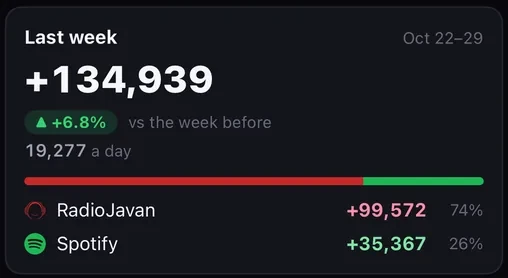
We use Google Analytics for analytics and Cloudflare for security and content delivery. A small number of other services process technical information on our behalf, for example to estimate your approximate region or to deliver signup notifications to us. Advertising on the site may be served by third-party advertising partners, which may be located outside your country and receive technical information such as your IP address, device type and the page you are viewing. Music data is sourced from the public pages of Spotify and RadioJavan; FarsiChart is not affiliated with any of them.
The FarsiChart apps (iPhone and Android)
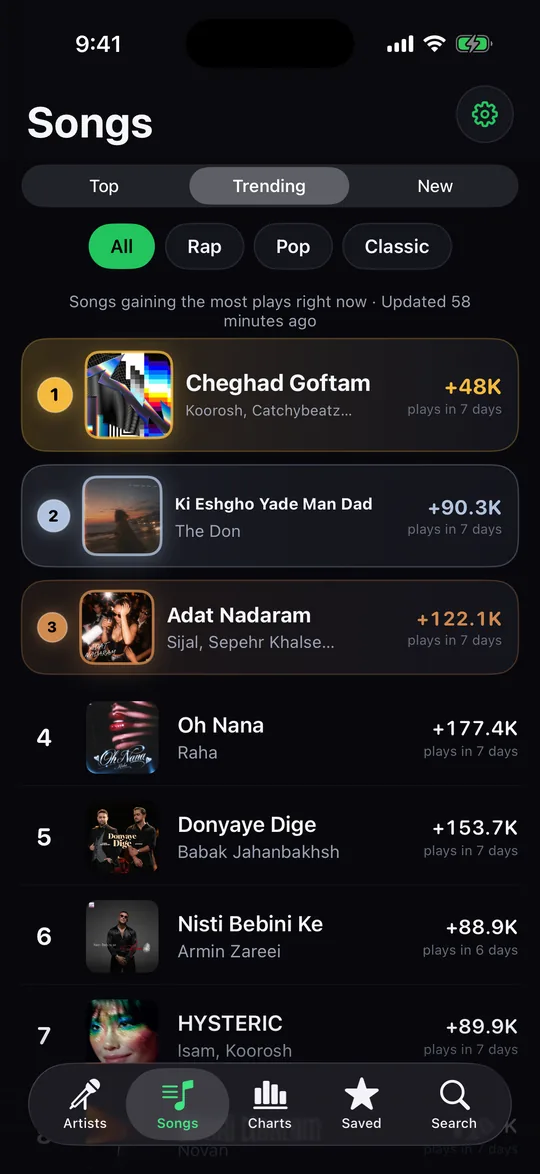
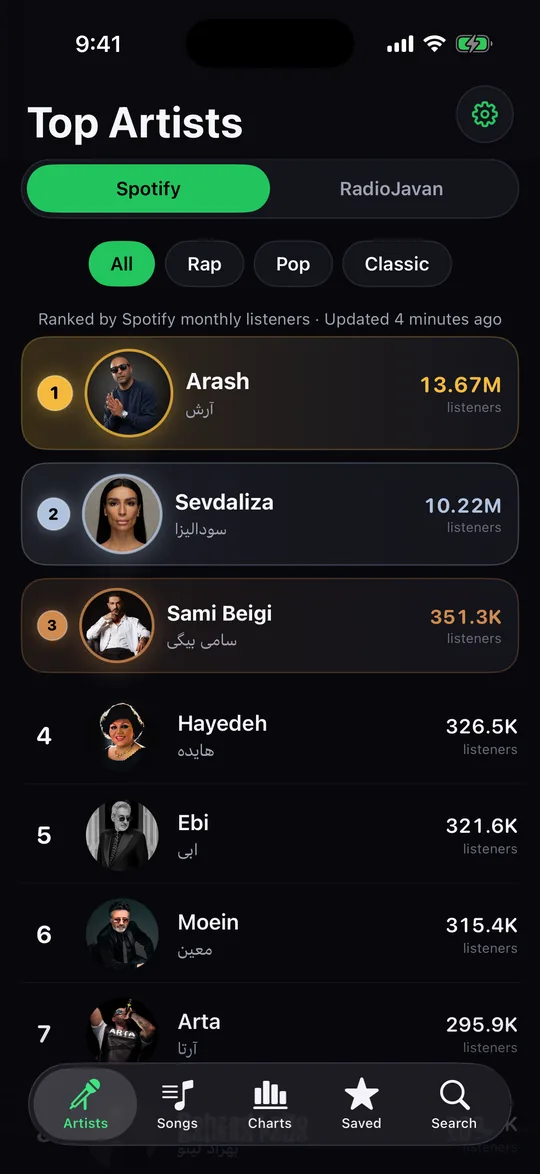
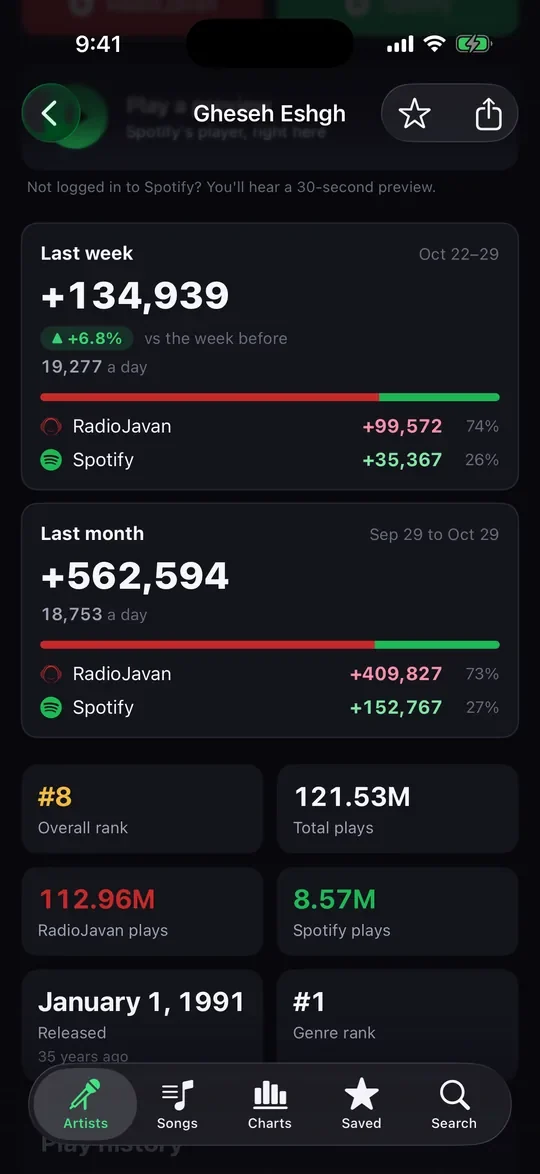
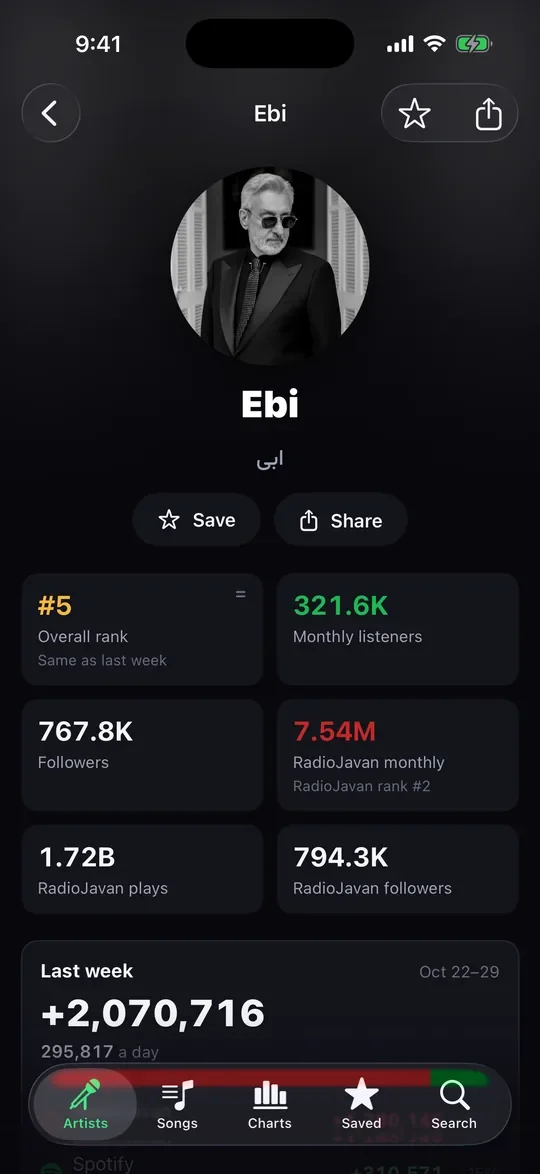
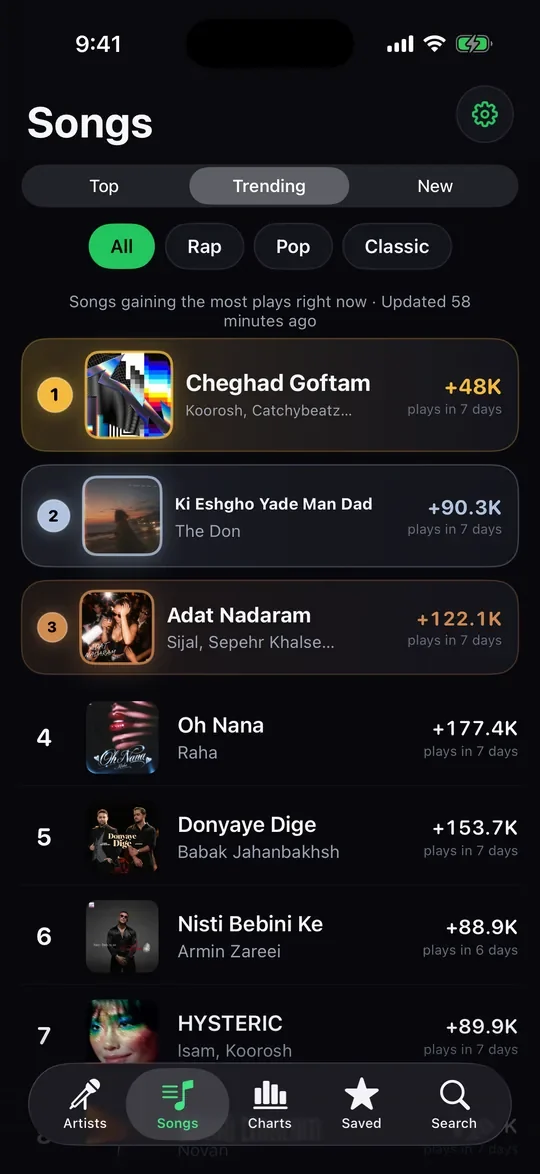
The FarsiChart apps for iPhone and Android work without an account and show no ads; we only receive a name, email or phone number if you choose to save an account (next section). To show a chart they ask our server for that chart, and the server keeps its standard technical logs (such as IP address) for security, just as it does for the website. If you suggest an artist under Add an artist, we receive the links and details you type, and your email only if you choose to add it. Deleting the app deletes everything it stored on your phone.
Optional FarsiChart account (apps)
Saving an account is optional. If you choose to, we keep the name and email address you give us, and the app sends us your settings and saved artists and songs so they come back if you change phones. To confirm the address and to log you back in, we email it a 6-digit code; that email is sent through Cloudflare’s email service. While you have an account, the app’s usage statistics (see below) are linked to it. You can also add optional details: a phone number, your country and city, and your birth year. They are linked to your account and used only by the FarsiChart team to understand and contact our listeners; they are never shown to other people, sold or used for ads. Each app has a FarsiChart ID, shown in Settings; if you contact us we use it to find your phone, or to send you a test or personal notification. You can change or remove the optional details at any time, and you can delete your account in the app: it closes at once, can be restored for 30 days, and after that your name, email, optional details and synced settings are erased.
Delete your account
You can delete your account in the app: open Settings, tap Your account and choose Delete my account at the bottom. It closes at once and can be restored for 30 days. After that we erase your name, email, optional details and synced settings. If you no longer have the app or your phone, email [email protected] from the address you used for the account and ask us to delete it. We confirm by email and the account is erased within 30 days.
App notifications
If you allow notifications, an anonymous push address is created for your phone: on iPhone by Apple, on Android by Google’s push service (Firebase Cloud Messaging). The app sends that address to our server together with the app language, your time zone, the alerts you switched on, the topics you picked, whether notifications are allowed on the phone and your saved artists and songs, so we can tell you about a new #1, the trending song of the day, a new song from an artist you saved or news about a song you saved; Apple or Google then delivers the alert to your phone. The app’s Your artists screen sends the same lists of artists and songs to fetch their news; the answer is kept for a short time so it loads faster, and it is not linked to your name or account. Android phones also send the phone’s model, which we use only to tell test devices apart and do not keep. If you have not opened the app or tapped an alert for a few days, we send fewer alerts until you are back (first one a day, then one a week); for that the server looks at when the app was last opened, from the usage statistics below. None of it names you. So the app’s Messages tab can show your past notifications, our server keeps the alerts it sent to your phone (the words, picture and link) for 60 days, linked only to that anonymous address. If you switch alerts off in the app’s or the phone’s settings they stop, and an address that goes unused for 60 days is deleted with its alerts. An Android phone without Google Play services gets no push address: there the app checks the charts itself a few times a day and sends nothing extra for alerts.
App usage statistics
Both apps send anonymous usage statistics to our own server only, never to Google or any ad company: a random number made up for this install (the FarsiChart ID in Settings, which is also sent with account and alert requests), the app and system version, the phone model, the app and phone language, the time zone, whether notifications are allowed, and what you do in the app, such as the charts, artists and songs you open, searches, saves and taps on Listen. Our server adds the country and city from its own network information and does not keep the IP address with these statistics. We use them only to count active users, make the app better and send fewer alerts while you are away; they are not used to identify you, for ads or for sale. You can turn them off any time in the app’s Settings, under Privacy (“Share anonymous usage data”). The statistics are deleted after about 13 months.
Our YouTube playlists
FarsiChart’s playlists on YouTube are created and updated with the YouTube API Services. We use them only to manage our own channel: we look up official, public music videos and add them to our playlists. We do not read anything from your YouTube or Google account and we collect nothing about the people who watch. Public video details we use (video id, title and channel) are never kept longer than 30 days without being refreshed. Watching our playlists on YouTube is subject to the YouTube Terms of Service and the Google Privacy Policy. We never ask for access to your Google account; if you have given any app access, you can remove it on your Google security settings page.
Advertising requests
If you send the form on Advertise on FarsiChart, we keep your name, how to reach you (email, phone or handle), what you would like to run, your budget and your message, together with the page you came from, your approximate country and city (from Cloudflare), time zone, device or browser and the time. Your IP address is not stored. The request reaches the FarsiChart team by email (through Cloudflare’s email service) and a short message, and we use it only to reply to you. To have it deleted, email [email protected].
Your choices
You can unsubscribe from the newsletter at any time. To request deletion of your data or for any privacy question, reach us via the contact below.
Contact
For privacy matters, contact us via Instagram at @FarsiChart.